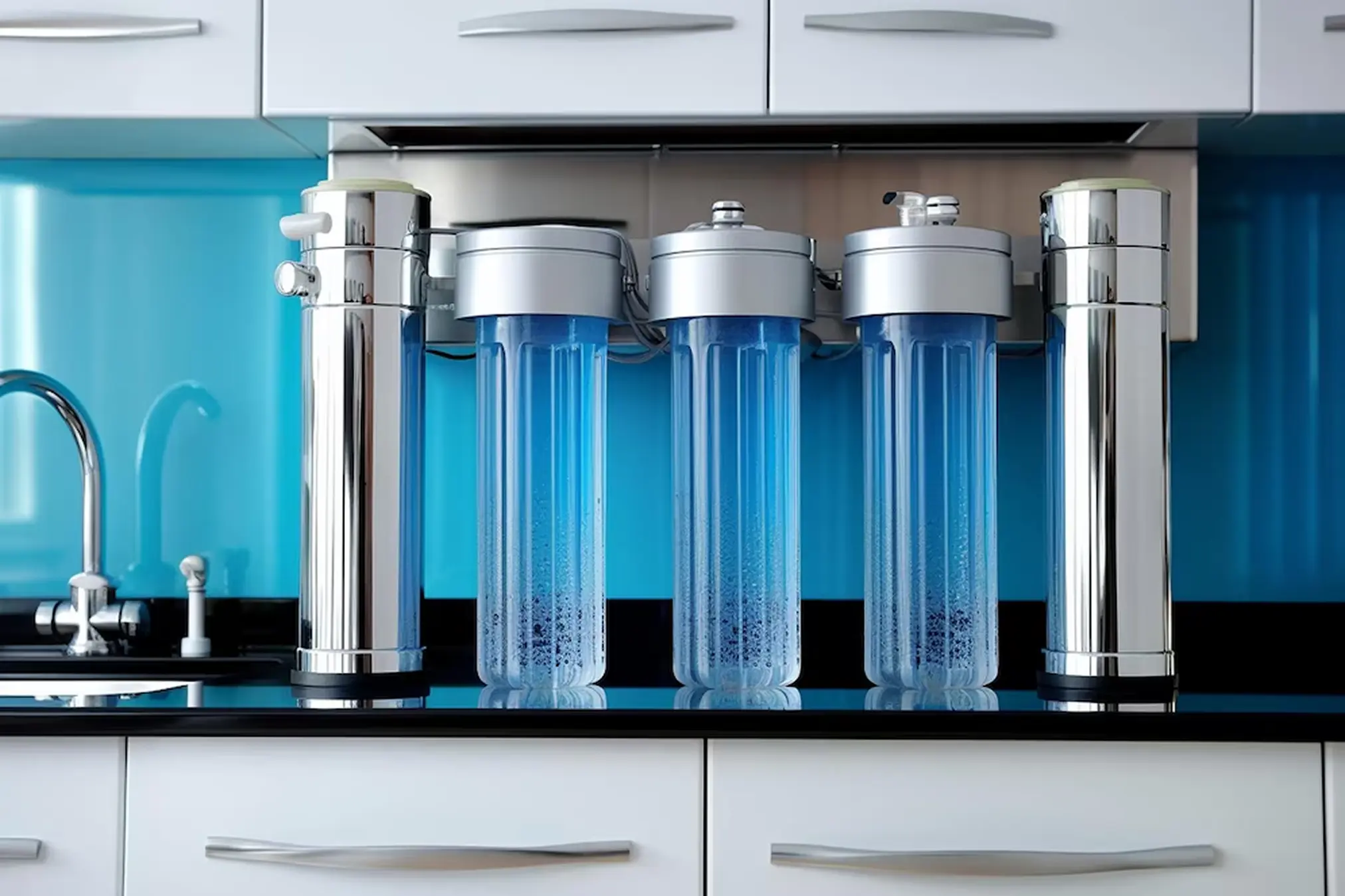
Not All Carbon Water Filters Are Created Equal
When shopping for a whole-home water filtration system, you may hear companies advertise coconut shell carbon or catalytic carbon. While both are used to improve water quality, there’s an important difference, especially when it comes to reducing a common municipal water disinfectant called chloramine.
Understanding that difference is especially important for homeowners in South Florida.
What Are Chloramines, and Why Are They in Your Water?
Most people are familiar with chlorine, which municipal water treatment facilities use to disinfect drinking water. However, many Florida municipalities use chloramines, a disinfectant created by combining chlorine with ammonia.
Chloramines last longer than traditional chlorine, helping prevent bacterial growth as water travels through underground pipes to your home.
You can’t see chloramines in your water, and you may not be able to taste or smell them either. Unlike chlorine, which can have a noticeable swimming-pool-like odor, chloramines are generally less noticeable. Your water can look crystal clear, taste perfectly normal, and still contain chemical disinfectants.
Chloramines Are Common in South Florida
Several South Florida water utilities, including Palm Beach County Water Utilities and
Miami-Dade Water and Sewer, use chloramines as part of their regular water treatment process.
Because chloramines are more difficult to remove than traditional chlorine, not every
whole-home carbon filter will perform the same way.
This is why it’s important to understand what’s actually inside your filtration system.
Coconut Shell Carbon vs. Catalytic Carbon: What’s the
Difference?
Coconut shell activated carbon is a commonly used filtration material. It works somewhat like a sponge, capturing certain impurities as water passes through.
Traditional coconut shell carbon is effective at reducing chlorine, improving taste and odor, and capturing certain organic compounds.
However, conventional coconut shell carbon is generally much less effective at reducing
chloramines under typical whole-home flow conditions. It can reduce chloramines, but it
often requires more contact time to do so.
Catalytic carbon is different and is specially processed to promote reactions that help break down chloramines more efficiently. This makes it particularly useful in whole-home applications, where water needs to flow quickly enough to supply showers, sinks, and appliances.
An important distinction is that catalytic carbon can also be made from coconut shells. What matters isn’t simply the source of the carbon, but how it’s processed and whether it’s designed to reduce chloramines.
When comparing systems, ask what type of carbon is being used, how much is inside the tank, and whether the system is designed for the disinfectants used by your municipality.
Why Allini Uses Catalytic Carbon
At Allini Water Filters of Florida, we understand that what’s inside your filtration tank matters just as much as the equipment itself.
All Allini water systems use catalytic carbon, along with KDF filtration media, to address chlorine, chloramines, and other applicable water-quality concerns.
We take into consideration the property’s water conditions, filtration needs, and required flow rates when recommending the appropriate system.
With more than 20 years of experience, we’re committed to providing quality filtration solutions backed by local experience and service.
Before investing in a whole-home water filtration system, understand what you’re buying and whether the filtration media is designed to treat your water effectively. Because when it comes to water filtration, what’s inside the tank matters.



 Facebook
 Twitter
 Pinterest