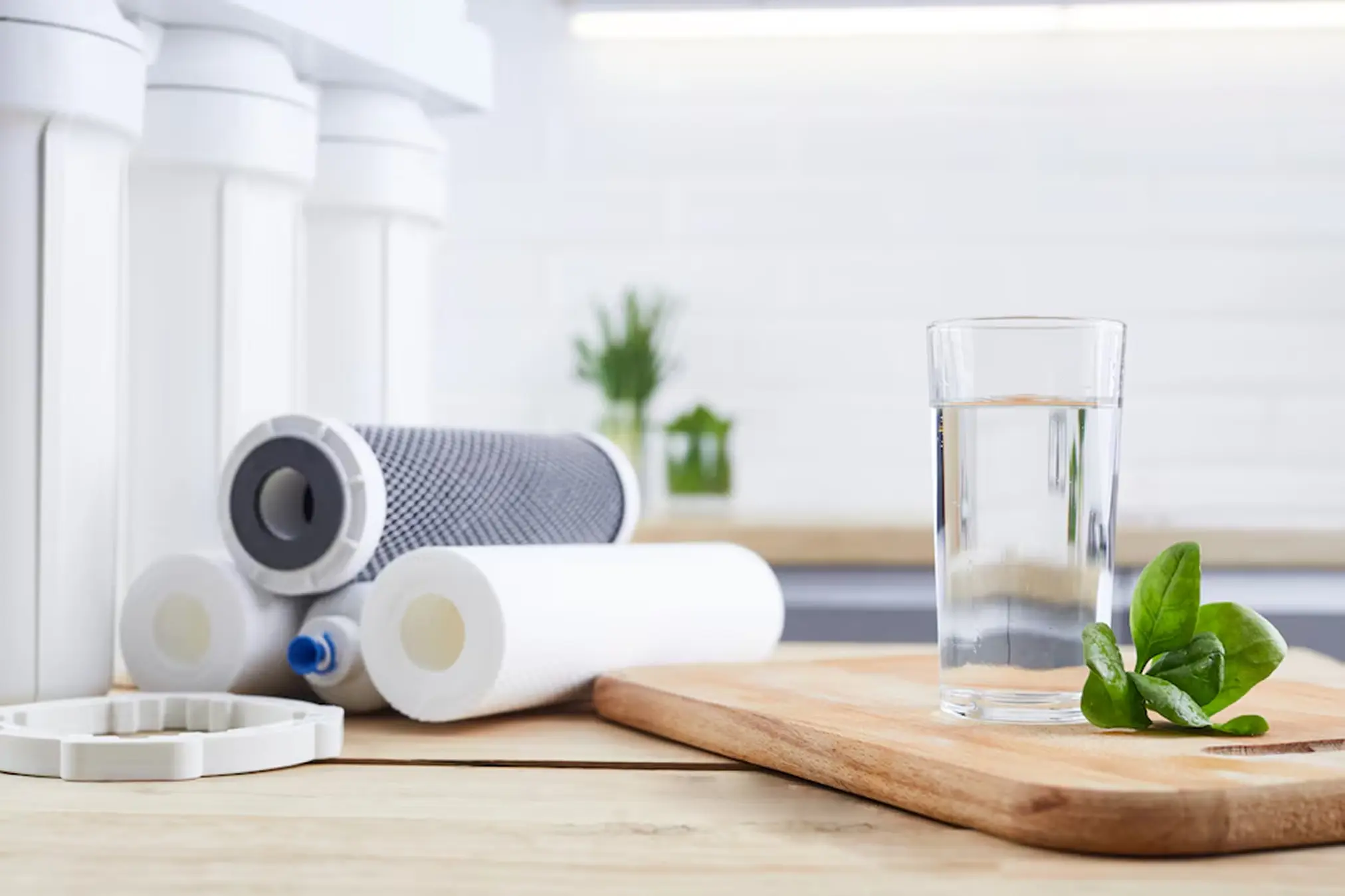
When people hear that a water filter is powerful enough to filter at the submicron level, one of the first questions is: If it can reduce tiny contaminants like microplastics, why doesn’t it also remove the good minerals?
The answer comes down to one important difference: microplastics are physical particles, while minerals are dissolved ions.
Microplastics Are Particles. Minerals Are Dissolved.
Microplastics are tiny pieces of plastic that can come from packaging, synthetic fabrics, industrial runoff, and everyday plastic breakdown. Even when they are extremely small, they are still solid particles floating in the water.
Minerals, such as calcium, magnesium, and potassium, are different. These minerals are dissolved into the water at an ionic level. They are not floating pieces of material that can be strained out like sand or plastic. They behave more like sugar dissolved in tea — once dissolved, they move with the water itself.
That is why a properly designed submicron filter can target many tiny physical contaminants while still allowing naturally occurring minerals to remain.
What Does a 0.02 Micron Filter Do?
A 0.02 micron filter is designed with extremely small pores that act like a very fine barrier. This helps reduce microscopic particles, including many microplastics, sediment, bacteria, and other suspended contaminants that are larger than the filter’s pore size.
At the same time, dissolved minerals are much smaller than these particles. Because minerals are present as ions, they are able to pass through with the water instead of being trapped by the filter.
In simple terms:
Microplastics are like tiny grains of sand. Minerals are like salt dissolved in water. A fine screen can catch the sand, but it does not remove the dissolved salt.
Why This Matters for Drinking Water
Many traditional purification systems, such as reverse osmosis, are designed to strip water down very aggressively. While reverse osmosis can be effective for certain contaminants, it can also remove much of the mineral content from the water and may create wastewater during the process.
Submicron filtration offers a different approach. Instead of removing everything, it focuses on reducing extremely small physical contaminants while helping preserve the mineral balance that gives water its natural taste and character.
This is especially important for homeowners who want cleaner, better-tasting water without completely demineralizing it.
Cleaner Water Without Stripping It Down
The goal of advanced filtration is not always to remove every single thing from water. The goal is to remove what does not belong — such as microplastics, particles, bacteria, chlorine taste and odor, and other unwanted contaminants — while keeping the water balanced, refreshing, and enjoyable to drink.
That is why Allini’s advanced filtration approach is designed to help deliver cleaner water without unnecessarily stripping away the naturally occurring minerals your body recognizes and your water needs for a crisp, clean taste.
The Bottom Line
A submicron filter can reduce tiny contaminants because they are physical particles. Beneficial minerals remain because they are dissolved ions that are far smaller than the filter pores and move naturally with the water.
That is the difference between simply filtering water and truly improving it: removing what does not belong while keeping the qualities that make water naturally refreshing.



 Facebook
 Twitter
 Pinterest